Why do I feel this way! Is it my hormones?

Have you ever had those moments when you have cried over something little, or shouted at someone you care about, or just felt this heaviness in your chest that you couldn’t name. And then somebody around you, or maybe even you yourself have blamed your hormones for this?
I have been there too! Even now, as someone who understands my patterns better than before, I still get caught on my emotions. But the more I learn, the more I realize our emotions aren’t ‘just random’. They are connected to our nervous system through our hormones. So, understanding these hormones changes everything.
A Quick Look Back
But historically, it wasn’t until the year 1993, that women were required to be included in clinical trails by NIH! And the reason for the exclusion was, of course, our hormones!!
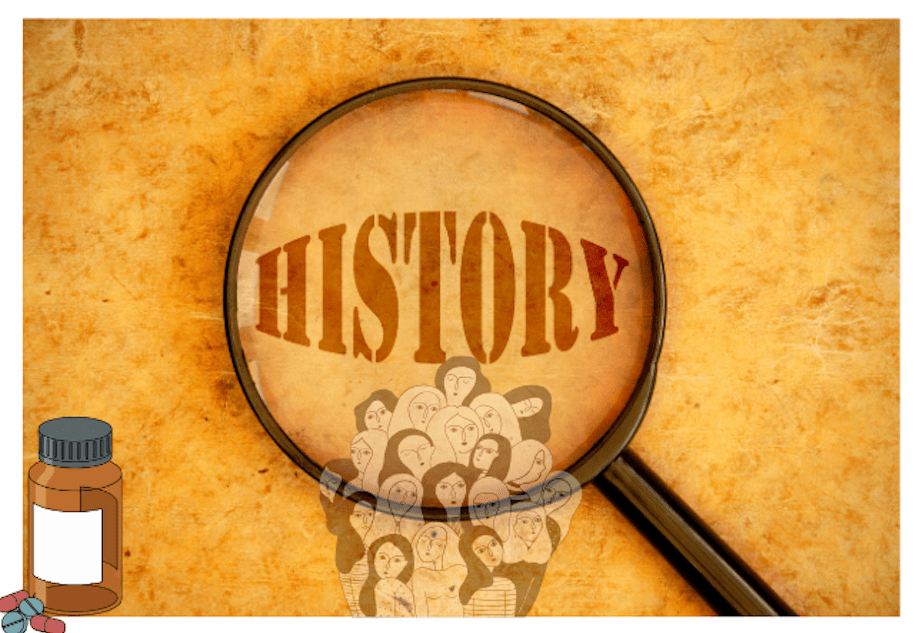
It was thought that since our hormones are too variable and unpredictable, it would mess up the study outcomes. So instead of studying the fluctuations and variabilities, they were simply avoided.
But this topic is very important!
Why?
Because the effects hormones have in our body is REAL!
A 2020 study found that at least 86 medications showed sex based differences on how they worked and in 96% of them, women metabolized drugs more slowly which means more side effects and stronger reactions!!!
So, I think it is exactly the reason why women hormones should be studied – they are unique, they impact not only our mood but also our body functions.
Menstrual Cycle and Hormone Changes
Let’s talk about your cycle, because it affects your brain far more than anyone ever explained to us.
During the first half of your cycle, or right after your period ends (the 5-14 days of your cycle) estrogen quietly rises. And when it rises, it boosts serotonin and dopamine, the chemicals that are known to brighten your mood, help you focus, and keep you feeling motivated. This is why many women feel more social or energetic during these days.
But this estrogen doesn’t stay steady. It rises, then dips around ovulation, and then falls before your period. And when estrogen falls, serotonin and dopamine fall with it, which is why your mood drops and your energy dips, during your ovulation and right around your period.
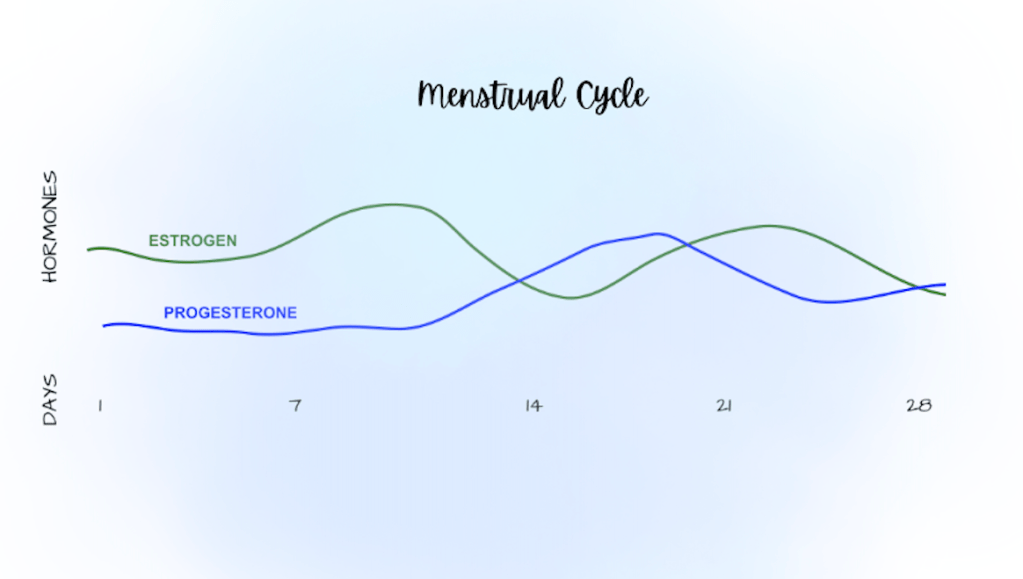
Then there’s progesterone, the hormone that works with GABA, the calming chemical in your brain. When progesterone is balanced, it can make you feel grounded and comforted. But when it swings too high or too low, irritability, sleep problems, or that restless emotional tension can show up. Progesterone dip is seen right around your period and after pregnancy.
One study found that women with PMS (Pre Menstrual Syndrome) had a sharp drop in progesterone three days before their period, whereas women without PMS had a gentle, slow decline over eight days. This means rapid shift in progesterone amounts is associated with PMS (the collective term for different physical and emotional symptoms that occur before your period). So, next time somebody says your PMS is your drama, tell them not and what causes them! ❤
Does stress impact your hormones differently?
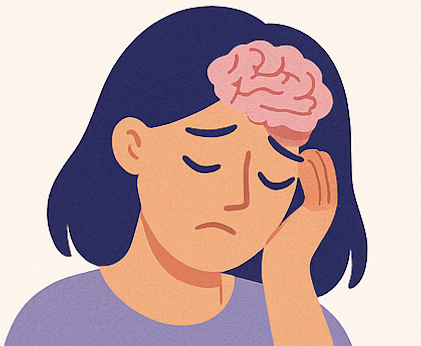
Cortisol is your stress hormone and it is released into your body when the stress levels are too high.
It is not a bad hormone, however. It plays an important role to prepare you for stressful or dangerous situations, by increasing your heart rate, suppressing hunger, increasing your blood sugar so that you are ready to avoid that danger or stress at any cost.
Too much of anything is not good! Similar is with cortisol.
When the cortisol levels stay high for too long, it starts negatively impacting your body by making you anxious, increasing your blood pressure, causing digestive issues and many more. One of the negative impact it has on women’s health is that it lowers the estrogen and progesterone, which is not good for our mental health, as discussed above.
But here is a fun fact!
During high estrogen phases, women’s cortisol responses tend to soften, almost like estrogen is buffering that emotional turmoil. But with repeated stress, our stress response can be dysregulated faster than men and this can dysregulate cortisol levels, leading to fatigue, inflammation and depression like symptoms.
The Shifts
Now that we got familiar with some basic concepts on women hormones and their impact on our mental health, understanding some of the extremes is also important.
We have already discussed above on how the drop in progesterone amounts right before your period is found to be correlated with the adversity of PMS that one can feel. Some scientists also say that the extent of both estrogen and progesterone drops or even fluctuations is correlated with PMS and severe fluctuations can cause PMDD (Pre-Menstrual Dysmorphic Disorder – a severe form of PMS and can lead to anxiety and depression like symptoms).
The severe hormonal fluctuations or severe drop can also be seen after postpartum and during menopause. Hence, the women in these phases of life are prone to mood disorders or depression.
These symptoms, however, tend to go away with estrogen and progesterone coming into balance/normal (which is different for each women). So, balance is the key.

There are hormonal therapies being medically offered to create the hormonal balance. But balance can be achieved naturally in some cases.
How?
This could be the topic of another blog! : )
XOXO
Sneha
Research Credits
NIH Revitalization Act of 1993 – https://orwh.od.nih.gov/toolkit/recruitment/history
Drug metabolism differences – https://pmc.ncbi.nlm.nih.gov/articles/PMC5867082
Female participation in trials – https://pmc.ncbi.nlm.nih.gov/articles/PMC8214160
Stress-exposure model of depression – https://pmc.ncbi.nlm.nih.gov/articles/PMC9673602/
Hormones & emotional processing – https://www.mdpi.com/2673-4184/3/3/33
Progesterone & neurotransmitters – https://pmc.ncbi.nlm.nih.gov/articles/PMC5508121
PMDD hormone manipulation study – https://pmc.ncbi.nlm.nih.gov/articles/PMC12079463

 Ananta_Stree